

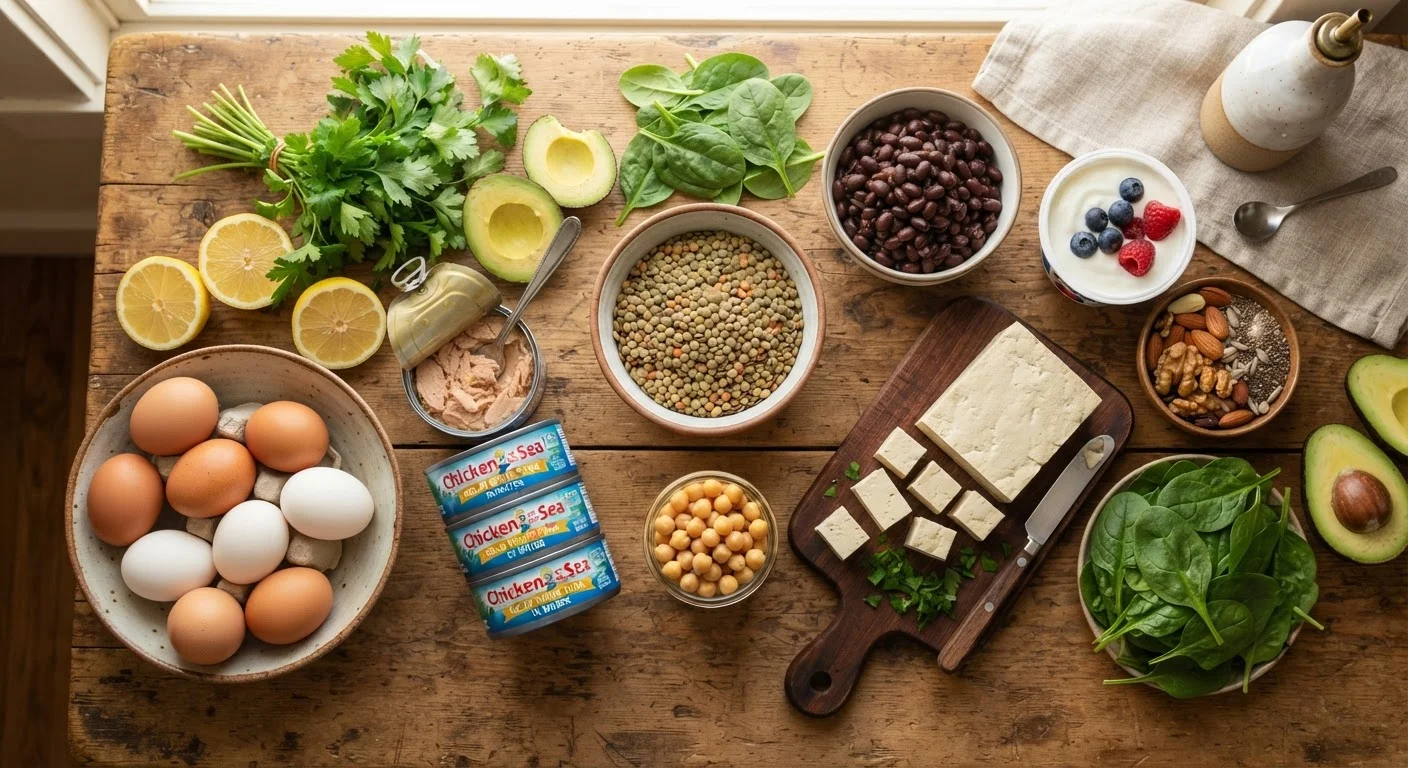
Our Verdict
No single protein source wins across every measure, but legumes and eggs consistently deliver the most nutritional value per dollar spent. Families with flexible tastes and some meal-planning willingness can meet protein needs comfortably on a modest grocery budget by blending plant and animal sources throughout the week.
| Best for | Recommended |
|---|---|
| Families stretching a tight weekly grocery budget | Lentils and dried chickpeas |
| Households wanting quick, high-protein meals with minimal prep | Eggs and canned tuna |
| Families seeking variety and long-term dietary sustainability | Mixed plant and animal protein approach |
| Parents prioritizing iron and complete amino acid profiles | Canned fish and eggs alongside legumes |
Why Protein Cost Per Serving Is the Number That Matters
When families scan grocery shelves, the sticker price per pound rarely tells the full story. What matters is how much usable protein you get per dollar spent. A pound of dried lentils yields multiple servings of cooked beans at a cost that's often a fraction of an equivalent serving of fresh meat. Understanding this distinction is the first step toward smarter protein shopping.
Protein needs vary by age and body size, but most nutrition authorities suggest adults aim for roughly 0.8 grams per kilogram of body weight daily, with growing children and active teens needing proportionally more. For a family of four, that adds up quickly - making cost efficiency a genuinely important factor, not just a nice-to-have. See where grocery money typically goes for broader context on family food spending.
| Lentils (dried) | Chickpeas (canned) | Eggs | Canned Tuna | Tofu | Chicken Thighs (frozen) | |
|---|---|---|---|---|---|---|
| Approx. cost per serving | Very low (~$0.20) | Low (~$0.35) | Low (~$0.30) | Low-moderate (~$0.60) | Moderate (~$0.50) | Moderate (~$0.80) |
| Protein per serving | ~18g per cup cooked | ~15g per cup | ~6g per egg | ~20g per 3 oz | ~10g per half-cup | ~25g per 3 oz |
| Complete protein? | No (pair with grains) | No (pair with grains) | Yes | Yes | Yes | Yes |
| Prep time | Low-moderate | Very low (canned) | Very low | Very low | Low | Moderate |
| Shelf stability | Excellent (dried) | Good (canned) | Refrigerated, ~3 weeks | Excellent (canned) | Refrigerated, ~1 week | Excellent (frozen) |
| Family meal versatility | High | High | Very high | Moderate-high | Moderate | High |
| Key micronutrients | Iron, folate, fiber | Iron, fiber, folate | Choline, vitamin D | Omega-3s, selenium | Calcium, iron | B vitamins, zinc |
Plant-Based Proteins: Affordable but Requiring a Little Strategy
Lentils, dried beans, chickpeas, and tofu consistently rank among the most economical protein sources available. Dried lentils, for example, can cost under $2 per pound and provide roughly 18 grams of protein per cooked cup. Canned versions cost slightly more but require no soaking and fit into a busy weeknight schedule.
The one consideration with most plant proteins is that they are incomplete - meaning they don't supply all nine essential amino acids in sufficient amounts on their own. This is easy to address. Eating a variety of plant foods throughout the day (grains alongside legumes, for instance) naturally covers the full amino acid spectrum. Soy-based foods like tofu and edamame are an exception: they are considered complete proteins. Explore affordable eating patterns that support family health for practical dietary frameworks that make this feel effortless.
Plant proteins also deliver fiber, which supports digestive health and helps family members feel full longer - a bonus when managing food budgets.
Animal Proteins: Eggs and Canned Fish Lead on Value
Among animal-based options, eggs and canned fish (tuna, sardines, salmon) offer the most protein per dollar. A dozen eggs typically provides 12 servings of about 6 grams of protein each, along with choline, vitamin D, and healthy fats. Eggs are also among the most versatile ingredients in a family kitchen - breakfast, lunch, or dinner.
Canned tuna and sardines deliver complete protein - all essential amino acids present - along with omega-3 fatty acids that support heart and brain health. Sardines in particular provide calcium from soft, edible bones, making them a surprisingly nutrient-dense option. Canned fish can be incorporated into pasta dishes, salads, and rice bowls with minimal effort.
Fresh and frozen chicken thighs, while pricier than legumes, remain a moderate-cost animal protein when bought in bulk or on sale, and their fat content makes them more forgiving to cook than leaner cuts. For guidance on keeping meals nutritious when money is especially tight, these evidence-informed strategies offer practical meal-framework ideas.
Make Dried Beans Work for Busy Families
Dried beans cost significantly less than canned but require soaking and longer cooking. A pressure cooker or slow cooker removes most of the hands-on effort - cook a large batch on the weekend, then freeze portions in two-cup amounts. These are ready to drop into soups, stews, or tacos throughout the week with no additional prep time.
Building a Practical Family Protein Plan
The most budget-friendly approach isn't choosing plant or animal proteins exclusively - it's weaving both through the week. A simple framework might look like: legume-based meals two or three nights (lentil soup, chickpea curry, black bean tacos), egg-based meals once or twice (frittatas, fried rice), and canned fish or chicken for the remainder.
Batch cooking dried beans and storing portions in the freezer dramatically reduces per-serving cost and saves weeknight prep time. Similarly, hard-boiled eggs kept in the fridge make an easy high-protein snack for kids and adults alike.
It's worth noting that nutrition needs differ across life stages. Pregnant individuals, young children, and older adults may have specific protein and micronutrient considerations - always consult a registered dietitian or healthcare provider for personalized guidance tailored to your family's circumstances.
This article is for general informational and educational purposes only and does not constitute medical or dietary advice. Please consult a qualified healthcare professional or registered dietitian for guidance specific to your family's health needs.
The content provided on our blog site traverses numerous categories, offering readers valuable and practical information. Readers can use the editorial team’s research and data to gain more insights into their topics of interest. However, they are requested not to treat the articles as conclusive. The website team cannot be held responsible for differences in data or inaccuracies found across other platforms. Please also note that the site might also miss out on various schemes and offers available that the readers may find more beneficial than the ones we cover.