

Why the Three-Category Framework Works
Most children experience the world in a single category: I want it, so I need it. That's developmentally normal, not a character flaw. The job of a parent or caregiver is to introduce a little structure that gives kids a way to sort their own impulses before turning to you.
The needs / wants / wishes framework does exactly that. It's simple enough for a five-year-old to grasp and nuanced enough to still be useful for a twelve-year-old. Rather than just saying no, you give kids a mental filing system - and over time, they start applying it on their own.
This fits neatly into the broader work of building financial literacy at every stage, and it pairs well with honest household conversations. If you'd like guidance on how to loop kids into the family picture without creating anxiety, see our piece on talking about the family budget in age-appropriate ways.
Start With Your Own Spending
Before introducing the framework to your kids, try categorising a week of your own household purchases. It makes for an honest, relatable conversation - and children are far more receptive when they see that adults use the same system. You don't need to share dollar amounts; the sorting process itself is the lesson.
Setting Up the Framework at Home
Before walking through the steps, gather what you'll need and decide on your approach. Younger children (ages 4-7) do best with a physical sorting activity. Older children (8 and up) can engage in conversation and written exercises.
What you will need
Keep the first session short - 20 to 30 minutes - and treat it as a conversation, not a lecture. The goal is curiosity, not compliance.
Define each category in plain, concrete language
Sit down with your child and explain the three categories using examples from their daily life:
- Needs: Things we must have to stay safe, healthy, and comfortable - food, a place to sleep, clothing that fits, medicine.
- Wants: Things that make life more enjoyable but that we'd survive without - a new video game, a particular snack, a name-brand backpack.
- Wishes: Bigger or longer-term desires that we'd love someday but aren't urgent and require planning - a family trip, a new bike, a special experience.
Use their current requests as real examples rather than hypotheticals. If they asked for something this week, walk through where it falls.
Run a sorting activity with real or pictured items
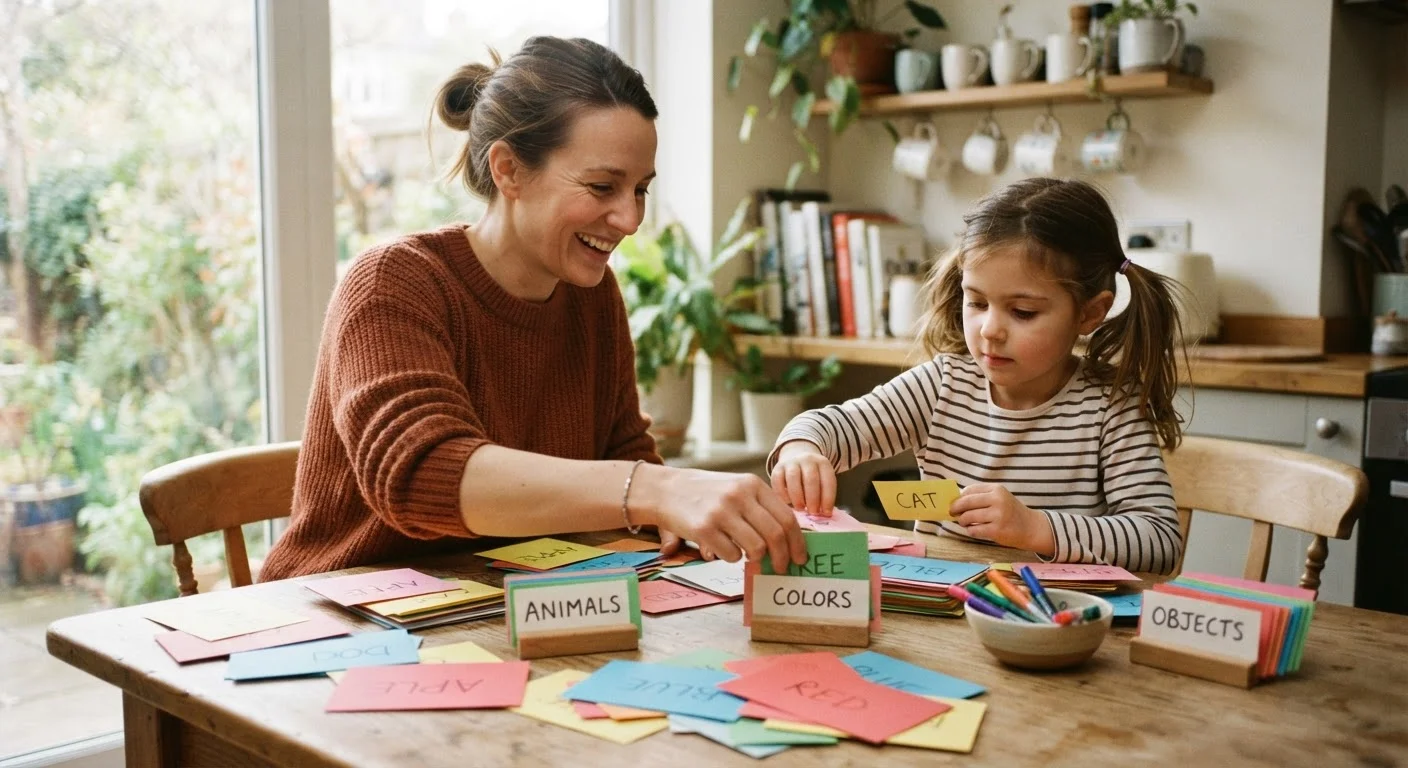
For younger children, write or print 10-15 items on small cards (apple, sneakers, tablet, winter coat, candy bar, vacation, school supplies, toy robot). Ask them to sort the cards into three labeled piles or zones on the table.
For older children, skip the cards and do a verbal round - name an item and have them categorise it and explain why. Disagreement is productive here; talk through the reasoning together rather than declaring a right answer immediately.
Apply the categories to a real upcoming purchase
Pick a real decision on the horizon - school supplies, a birthday gift request, or a treat they've been asking about. Walk through the questions together:
- Which category does this fall into?
- If it's a want or wish, when and how could we plan for it?
- Is there a need that should come before this?
This turns the exercise from abstract to practical and shows children that the framework has real consequences - in a fair, matter-of-fact way.
Create a simple wishes list or savings goal
Help your child write down one or two wishes and estimate what saving toward them might look like. This doesn't have to be precise - the point is to connect wanting something with the idea of working toward it over time.
A handwritten list on the fridge, a jar with a label, or a simple notebook entry all work. The physical record gives the wish a shape and makes patience feel purposeful rather than arbitrary.
Once you've introduced the framework, keep it alive by referencing the categories naturally during everyday moments - at the grocery store, while watching ads, or when kids ask for something new. Children who struggle with impulse control around spending may benefit from the strategies in our article on teaching impulse control around money.
Keeping It Going Beyond the First Conversation
One conversation won't rewire spending habits - consistency is what builds the skill. The categories should come up regularly, not just when a child is asking for something you'd rather not buy.
Try a monthly check-in where each child names one thing in each category. This normalises the framework as a planning tool, not a denial mechanism. Over time, children begin to see wishes as goals they can work toward - which introduces saving as a purposeful act rather than a punishment.
Every child approaches money a little differently. If you notice your child is either extremely reluctant to spend anything or seemingly indifferent to saving, it may help to read about how children develop different money personalities and how to meet them where they are.
For families just starting these conversations from scratch, our beginner's guide to teaching kids about money covers the foundational concepts worth introducing first.
This article is for general informational and educational purposes only and does not constitute financial advice. Consult a qualified financial professional for guidance specific to your family's situation.
The content provided on our blog site traverses numerous categories, offering readers valuable and practical information. Readers can use the editorial team’s research and data to gain more insights into their topics of interest. However, they are requested not to treat the articles as conclusive. The website team cannot be held responsible for differences in data or inaccuracies found across other platforms. Please also note that the site might also miss out on various schemes and offers available that the readers may find more beneficial than the ones we cover.