

Our Verdict
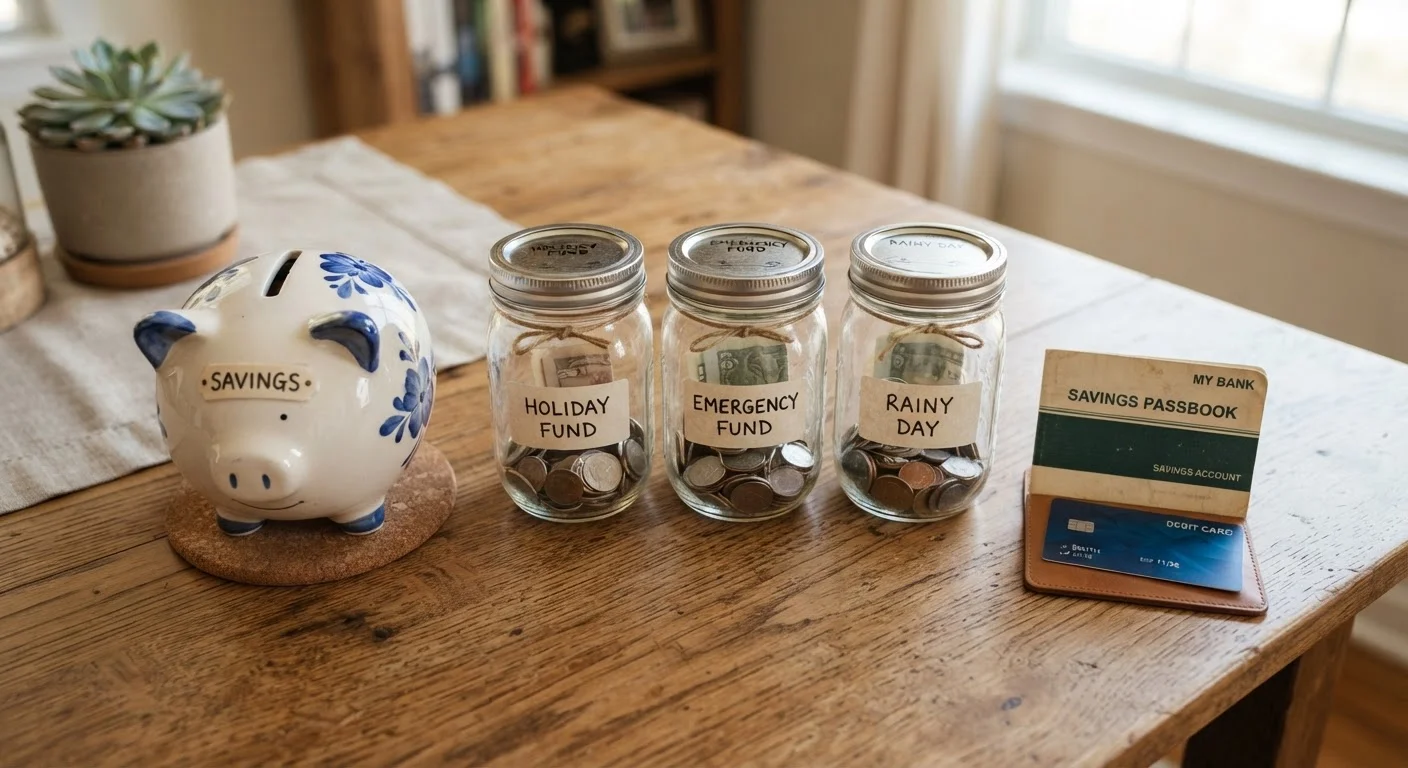
No single saving method is right for every child or every stage. Physical containers make money real and immediate for young children, while bank accounts add authenticity and long-term habit-building for older kids. Most families find success layering these tools over time rather than choosing just one.
| Best for | Recommended |
|---|---|
| Young children ages 3-6 learning that money is saved, not just spent | Piggy Bank |
| Children ages 5-10 practicing save/spend/give decisions | Labeled Jars |
| Kids ages 8 and up ready for longer-term goals and digital banking concepts | Child Bank Account |
| Families wanting to build on all three lessons progressively | Combination Approach |
Why the Container Matters More Than You Think
When it comes to teaching kids about money, the tool you choose isn't just a holder for coins - it shapes what lesson your child actually absorbs. A piggy bank says "money accumulates." Labeled jars say "money has a purpose." A bank account says "money can grow and move in ways you can't always see." Each is a different lesson, not a better or worse one.
Before picking a method, it helps to understand where your child is developmentally. As outlined in research on what kids understand about money at different ages, abstract ideas like interest or digital balances don't click for most children until around age 7 or 8. Younger kids learn best through concrete, hands-on experience - which is exactly why physical containers still hold up.
This comparison walks through the three most common approaches so you can match the method to your child's current stage.
Piggy Banks: Simple, Tangible, and a Great Starting Point
A classic piggy bank - or any single container - does one thing well: it makes saving a physical habit. A young child who drops coins into a slot and hears them clink is experiencing money as something real and accumulating. That sensory connection matters at ages 3 through 6, when abstract concepts don't stick.
The main limitation is also its simplicity. A single container doesn't help a child distinguish between saving for something specific versus spending freely. There's no built-in structure for goals or giving. And because the money is just "in there," it can be easy for kids to raid the bank without a clear plan.
Best used for: Building the basic habit of setting money aside, introducing the idea that you don't spend every dollar you receive.
Labeled Jars: Teaching the Spend-Save-Give Framework
The labeled jar system - typically three or four clear jars marked for spending, saving, and giving (sometimes a fourth for investing or a specific goal) - is one of the most widely recommended approaches for kids in the 5-to-10 range. The transparency is deliberate: kids can literally see their money growing in each category.
This method maps directly onto foundational financial literacy building blocks for children, reinforcing that every dollar has a job. When a child receives $5, they practice allocating it - maybe $2 to spend, $2 to save toward a toy, $1 to give. That decision-making is the lesson, not just the saving itself.
Make Jar Allocations a Weekly Ritual
Set aside a few minutes each week - after an allowance is given or chores are paid - to sort money into jars together. Keeping this routine consistent, rather than occasional, is what builds the habit. Even a couple of minutes of deliberate sorting reinforces that every dollar has a destination.
The jar system also surfaces your child's natural money tendencies early. Some kids will immediately stuff everything into saving; others will resist putting anything there. Neither is wrong - it's data. Understanding those tendencies is covered in more depth in our piece on raising a saver vs. a spender.
Main trade-off: Physical cash required. As kids get older and receive gift cards or digital payments, the jar system becomes harder to maintain without an intentional workaround (like having parents exchange digital amounts for cash).
Children's Bank Accounts: Real-World Banking Skills
A children's or youth savings account - typically a custodial account opened jointly with a parent - introduces kids to how money actually works in the adult financial world: deposits, balances, and in many cases, earned interest. For kids around 8 and older, seeing a balance grow on a statement or app can be genuinely motivating.
Bank accounts also prepare kids for the reality that most money today is digital. Practicing the habit of checking a balance, understanding a deposit, or watching interest accrue (even in small amounts) builds skills they'll use for the rest of their lives. This is part of getting started with teaching kids about money in a way that reflects real financial systems.
The downside is abstraction. For younger children especially, a number on a screen doesn't feel like money. Without the physical experience of handling cash, the emotional weight of spending decisions can be harder to develop. Bank accounts work best as a complement to physical methods, not a replacement for them.
This article provides general financial education for families and is not personalized financial advice. Consult a qualified financial professional for guidance specific to your situation.
Comparing the Three Methods Side by Side
Each saving method has a different strength, and understanding the trade-offs helps you choose - or combine - based on what your child needs right now.
| Piggy Bank | Labeled Jars | Child Bank Account | |
|---|---|---|---|
| Best age range | 3-6 years | 5-10 years | 8 years and up |
| Teaches | Basic saving habit | Spend/save/give allocation | Digital banking and interest |
| Visibility of money | Low (opaque container) | High (clear jars) | Low (abstract balance) |
| Works with digital payments | No | Requires workaround | Yes |
| Supports multiple goals | No | Yes | Partially |
| Setup effort | Very low | Low | Moderate (requires adult) |
| Earns interest | No | No | Yes (typically small) |
Many families find that a layered approach works best over time: start with a piggy bank for toddlers, transition to labeled jars around kindergarten, and open a bank account when your child is ready to understand digital money. You can even run jars and a bank account in parallel, using jars for short-term goals and the account for longer ones.
For families looking to add a giving dimension to this framework, charitable giving as part of a child's financial education offers practical ways to build that habit alongside saving and spending.
The content provided on our blog site traverses numerous categories, offering readers valuable and practical information. Readers can use the editorial team’s research and data to gain more insights into their topics of interest. However, they are requested not to treat the articles as conclusive. The website team cannot be held responsible for differences in data or inaccuracies found across other platforms. Please also note that the site might also miss out on various schemes and offers available that the readers may find more beneficial than the ones we cover.