

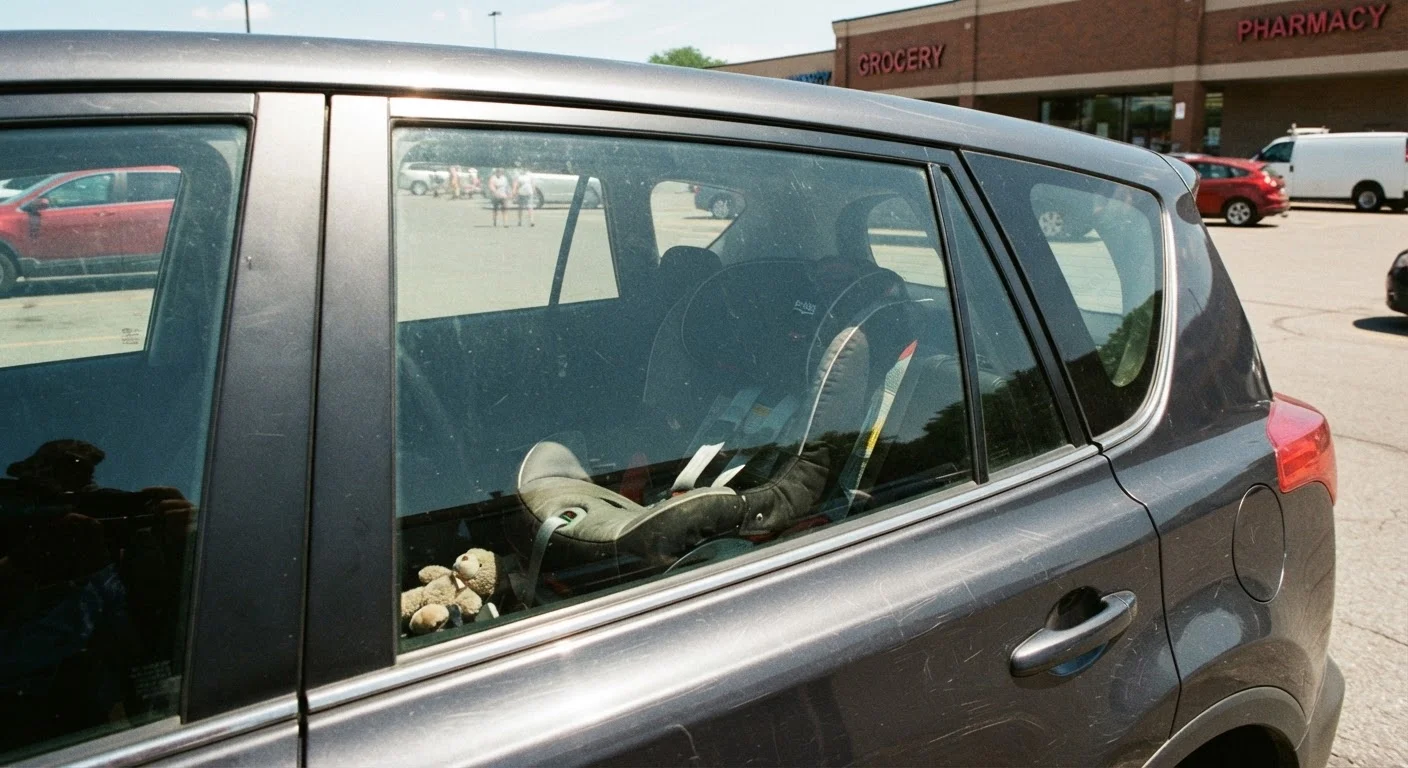
Why Vehicle Heat Is More Dangerous Than Most Families Realize
On a 90°F day, the interior of a parked car can reach 130°F within 20 minutes. Even on a relatively mild 70°F day, cabin temperatures can climb to over 100°F given enough time. This happens because a car's windows act like a greenhouse - solar radiation enters easily but heat cannot escape at the same rate.
For children, the danger is acute. A child's body heats up three to five times faster than an adult's, and their thermoregulation system - the body's ability to cool itself through sweating and circulation - is far less efficient. Heatstroke, defined as a core body temperature above 104°F, can cause organ failure. At 107°F, it is frequently fatal. These thresholds can be reached surprisingly quickly in a hot vehicle.
Understanding the physiology helps explain why this danger is not limited to scorching summer afternoons. Deaths have occurred on days when outside temperatures were in the 60s°F. The car's enclosed space and direct sun exposure do the rest.
19°F
Temperature rise in 10 minutes
Studies by the National Highway Traffic Safety Administration and independent researchers have found vehicle interiors rise approximately 19°F within the first 10 minutes on a warm day.
3-5×
Faster body heating in children vs. adults
According to pediatric safety research, a child's core body temperature rises three to five times faster than an adult's in the same hot environment.
107°F
Core body temperature threshold for fatal heatstroke
Medical literature identifies 107°F (41.7°C) core body temperature as the point at which heatstroke frequently becomes fatal due to organ failure.
Common Myths - and What the Evidence Actually Shows
Misconceptions about hot car danger are widespread - and some of them are genuinely deadly. The myth-and-fact pairs below address the most common errors in thinking that put children at risk.
Myth
It has to be extremely hot outside for a car to become dangerous.
Fact
Dangerous interior temperatures can build on days as mild as 60-70°F, particularly in direct sunlight.
Many people anchor their concern to heatwave conditions, but the greenhouse effect inside a closed vehicle operates independently of ambient temperature. What matters is solar intensity, how long the car has been parked, and the color of the interior and exterior. A dark-interior vehicle parked in direct sun on a partly cloudy 72°F day can still reach temperatures that threaten a small child's life within 30 to 40 minutes.
Myth
Cracking a window keeps the car cool enough to leave a child safely inside.
Fact
Research has found that cracking a window has a negligible effect on interior temperature rise.
Studies measuring temperature differences between fully closed and slightly open car windows have found only minimal reductions in peak interior temperatures. The primary driver of heat buildup is solar radiation through the glass, not air circulation alone. A cracked window does not meaningfully protect a child left in a hot vehicle, and the practice provides a false sense of safety that can be genuinely dangerous.
Myth
A responsible parent would never forget a child in the car - it only happens to negligent caregivers.
Fact
Memory researchers and pediatric safety experts consistently find that any caregiver can forget a child under the right conditions.
The human brain's prospective memory - remembering to do something in the future - is highly vulnerable to routine disruption. When a caregiver's routine changes (a different drop-off route, an early morning, unusual stress), the brain can fail to update its working picture of the situation. The child, quiet in a rear-facing seat, may not trigger conscious awareness. This is not a moral failing; it is a documented characteristic of human cognition. Framing these tragedies as something that only happens to bad parents actively prevents good parents from taking precautions.
Myth
Children who get too hot in a car will cry or make noise, giving a caregiver enough warning.
Fact
Heatstroke can cause rapid loss of consciousness, and infants may not cry effectively before that point.
Infants and young toddlers have limited ability to communicate distress in ways that carry through a closed vehicle to someone outside. More critically, as core body temperature rises rapidly, children can become lethargic and lose consciousness without prolonged crying. By the time a bystander or caregiver realizes something is wrong, the situation may already be life-threatening. Relying on audible distress signals as a safety net is not a reliable strategy.
Myth
Hot car deaths are a rare, freak occurrence that isn't worth worrying about.
Fact
Vehicular heatstroke is a leading cause of non-crash vehicle-related death in children under 15 in the United States.
Data tracked by safety researchers show that child vehicular heatstroke deaths occur every year across a wide range of states, climates, and family circumstances. The number of annual deaths has remained stubbornly persistent despite increasing public awareness. Because the risk is real, consistent, and preventable, it warrants the same practical attention families give to car seat installation and road safety - not alarm, but informed, habitual caution.
For a broader look at dangerous beliefs around child vehicle safety, see common car safety myths parents still believe.
Proven Strategies to Prevent Hot Car Tragedies
Most hot car deaths are not the result of neglect or indifference - they result from a disruption in routine, stress, or simple human memory failure. Researchers who study these incidents consistently find that any caregiver, regardless of education level or level of attentiveness, can be vulnerable under the right conditions.
Prevention strategies that work focus on building external reminders rather than relying on memory alone:
- Place a personal item in the back seat - a phone, wallet, or shoe - whenever a child is in the car. You will not leave the vehicle without noticing it.
- Ask your childcare provider to call if your child does not arrive as expected. This creates an independent check on routine.
- Always check the back seat as a habit before locking the car, even when you are certain no child is with you.
- Keep parked vehicles locked at all times, including the trunk. Children who climb in unsupervised account for a meaningful share of hot car deaths.
- Use available technology - many newer vehicles include rear occupant alerts that remind drivers to check the back seat before exiting. Some third-party devices perform the same function.
These strategies complement broader child passenger safety practices. If you want to make sure your child is as safe as possible on every journey, it is worth reviewing why car seat installation so often goes wrong and how to check your own setup.
If You Find a Child in a Hot Car
Call 911 immediately. If the child is unresponsive or appears to be in distress, do not wait - get the child out of the vehicle as quickly as possible and move them to a cool environment while help is on the way. In most U.S. states, bystanders who act in good faith to rescue a child from a hot vehicle are protected from civil liability under specific laws, though you should verify the rules in your state.
This article provides general safety education and is not a substitute for guidance from a certified child passenger safety technician or relevant public health authority.
The content provided on our blog site traverses numerous categories, offering readers valuable and practical information. Readers can use the editorial team’s research and data to gain more insights into their topics of interest. However, they are requested not to treat the articles as conclusive. The website team cannot be held responsible for differences in data or inaccuracies found across other platforms. Please also note that the site might also miss out on various schemes and offers available that the readers may find more beneficial than the ones we cover.