

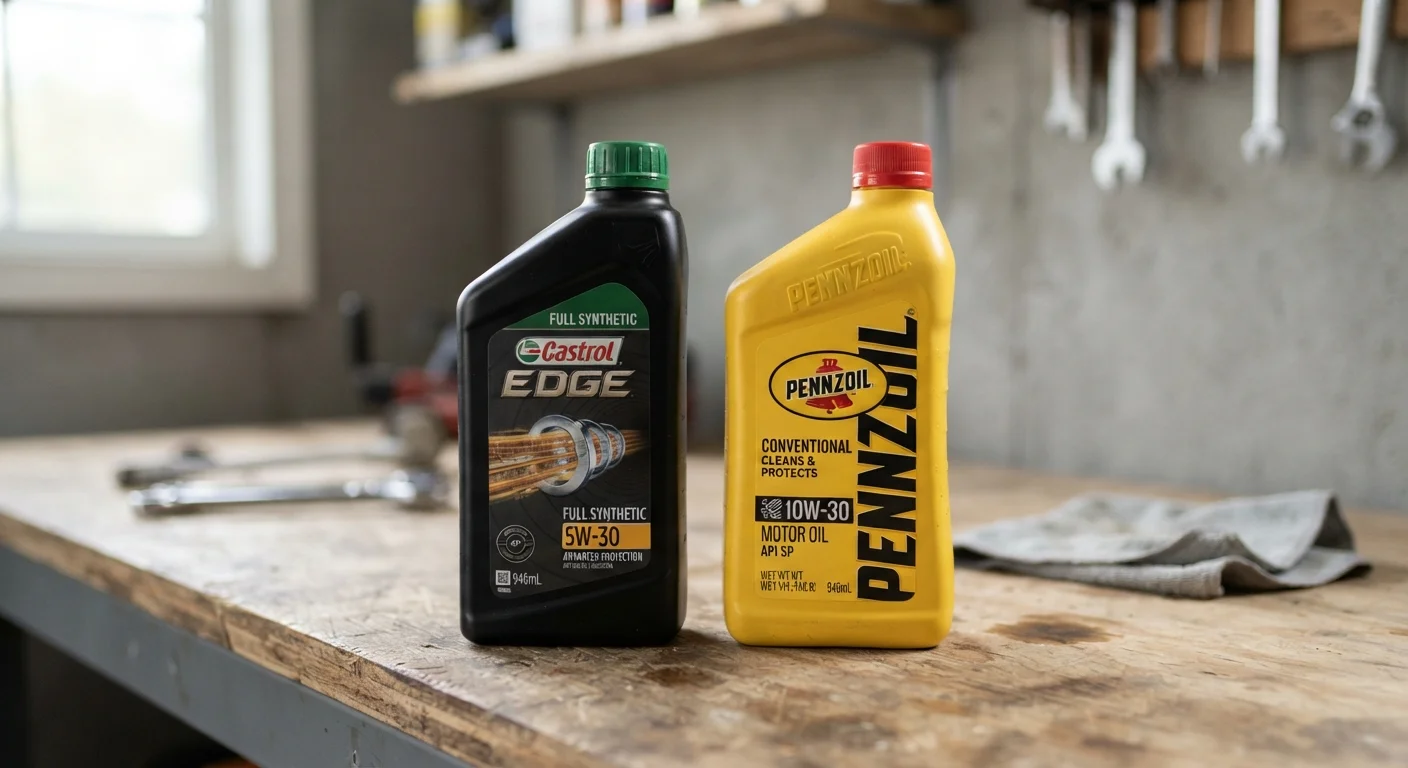
Option A
Synthetic Engine Oil
The engineered, high-performance option for modern vehicles.
Best for: Families with newer vehicles, those in extreme climates, or drivers who want longer intervals between oil changes.
Option B
Conventional Engine Oil
The time-tested, straightforward choice for older or lower-mileage engines.
Best for: Owners of older vehicles with simpler engine designs who change oil frequently and want a lower per-change cost.
What's the Actual Difference?
Both synthetic and conventional motor oil do the same fundamental job: they lubricate your engine's moving parts, reduce friction, carry away heat, and help prevent wear. The difference lies in where they come from and how they're made.
Conventional oil is refined from crude petroleum. It contains a mix of naturally occurring molecules of varying sizes, which means it performs reasonably well under normal conditions but can break down faster under sustained heat or cold.
Synthetic oil is either chemically engineered from scratch (full synthetic) or blended with conventional oil (synthetic blend). This process produces a more uniform molecular structure, which translates to more stable performance across a wider range of temperatures and operating conditions.
Think of it like the difference between rough-cut lumber and precision-machined parts - both work, but one is engineered to tighter tolerances.
| Criterion | Synthetic Oil | Conventional Oil |
|---|---|---|
| Source | Chemically engineered or highly refined | Refined from crude petroleum |
| Typical change interval | 7,500-10,000+ miles | 3,000-5,000 miles |
| Cost per change | Higher upfront | Lower upfront |
| Performance in extreme temps | Excellent - stable in heat and cold | Moderate - can thicken in cold |
| Best vehicle fit | Modern, high-performance engines | Older or simpler engines |
| Warranty considerations | Often required by manufacturer | May not meet modern specs |
What This Means for Your Family's Car
For most families, the practical question isn't which oil is technically superior - it's which one is right for your vehicle and budget. Here's what actually matters:
Check Your Owner's Manual First
Your vehicle's manufacturer specifies the oil type and viscosity grade (for example, 5W-30) your engine needs. Some modern engines require full synthetic - using conventional oil could void your warranty or cause accelerated wear. The manual is the final word, not the label on a bottle at the parts store.
Oil Change Frequency
Conventional oil typically requires a change every 3,000 to 5,000 miles. Synthetic oil can often go 7,500 to 10,000 miles or more between changes, depending on the vehicle and driving conditions. That means fewer trips to the shop per year. See our guide to oil change intervals for a deeper look at how those numbers are determined.
Total Annual Cost
A conventional oil change may cost less upfront, but if you're doing it twice as often, the annual totals can come close - or even favor synthetic depending on labor costs in your area. Run the numbers for your specific driving habits rather than assuming one is always cheaper.
When Your Manual Says 'Synthetic Required'
Some manufacturers - particularly those with turbocharged or direct-injection engines - specify full synthetic oil as a requirement, not a suggestion. Using conventional oil in these engines can shorten engine life and may affect your warranty coverage. If your manual uses the word 'required,' treat it as non-negotiable. When in doubt, ask a licensed mechanic to confirm what's appropriate for your specific vehicle.
Common Questions Families Ask
Can I switch from conventional to synthetic? For most vehicles, yes - but if your car is older, has high mileage, or has never had synthetic oil, it's worth asking a qualified mechanic before switching. Some older engines with worn seals may experience minor leaks when synthetic is introduced, because synthetic oil flows more freely.
Is synthetic blend a good middle ground? Synthetic blend oils mix conventional and synthetic base stocks. They offer some improved performance over straight conventional oil, usually at a price point in between the two. They can be a reasonable choice if your manual doesn't require full synthetic and you want a modest performance bump.
Does my driving style matter? Yes. Short trips, stop-and-go traffic, towing, or extreme temperatures all put extra stress on engine oil. In those conditions, synthetic oil's stability becomes more valuable. If your family does mostly highway driving in moderate weather with a newer car, conventional or synthetic blend may be entirely adequate - again, follow your manual.
For a broader look at how your choice of powertrain affects long-term running costs, our comparison of petrol, diesel, and hybrid costs puts oil maintenance into a wider ownership context.
The content provided on our blog site traverses numerous categories, offering readers valuable and practical information. Readers can use the editorial team’s research and data to gain more insights into their topics of interest. However, they are requested not to treat the articles as conclusive. The website team cannot be held responsible for differences in data or inaccuracies found across other platforms. Please also note that the site might also miss out on various schemes and offers available that the readers may find more beneficial than the ones we cover.