

Our Verdict
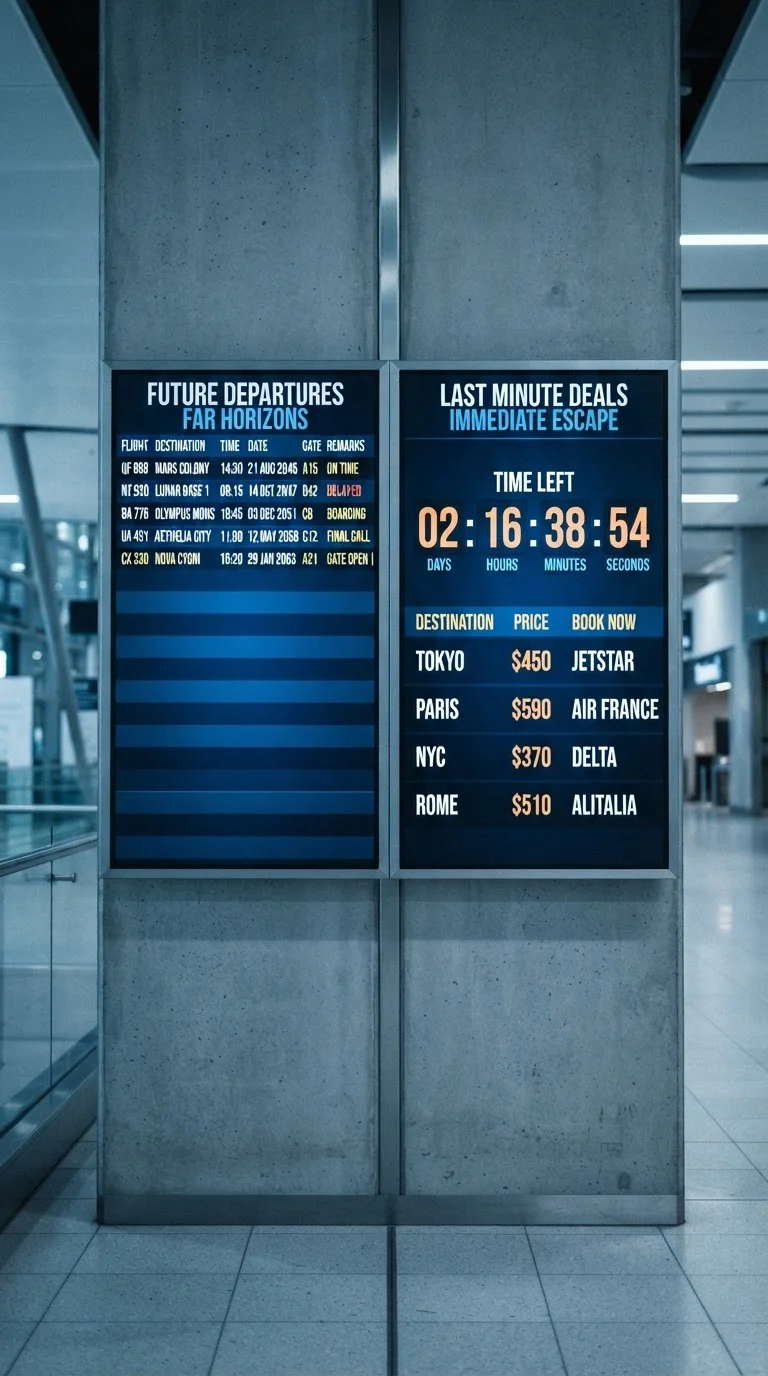
For most budget-conscious families, booking flights early - particularly three to six months ahead for international travel and six to eight weeks out for domestic trips - reduces both cost and stress. Last-minute savings are real but unreliable and demand flexibility most families with children cannot offer. Hotels are a partial exception, where waiting can occasionally pay off outside peak periods.
| Best for | Recommended |
|---|---|
| Families with fixed school-holiday travel windows | Far in Advance |
| Couples or solo travelers with fully flexible schedules | Last Minute |
| International or peak-season flights to high-demand destinations | Far in Advance |
| Mid-week hotel stays in non-peak leisure destinations | Last Minute |
What the Research Actually Says About Flight Pricing
Airlines use dynamic pricing algorithms that adjust fares hundreds of times a day based on demand, seat availability, and competitive signals. Several large-scale analyses of airfare data - including studies by fare-tracking services and academic researchers - consistently find that the lowest fares for domestic US flights tend to appear roughly one to three months before departure. For international routes, that window often extends to three to six months out.
What studies do not generally support is the idea that waiting until the last week guarantees a discount. On routes with consistent demand - think New York to Los Angeles, or any city pair during Thanksgiving - fares typically rise sharply inside the 21-day window as business travelers and latecomers fill remaining seats. The "last-minute deal" narrative largely reflects an older era when airlines routinely discounted unsold inventory. Today, most carriers manage capacity tightly enough that sellouts are common on popular routes during peak periods.
For families, the math is further complicated by group size. Fare algorithms often display the price for the last available seat in a fare bucket - meaning a family of four may trigger a higher per-seat price than a solo traveler searching the same flight on the same day. Fare tracking tools and flexible-date calendars can help you monitor price trends over time rather than guessing.
Where Last-Minute Bookings Can Still Make Sense
Last-minute pricing advantages have not disappeared entirely - they have migrated to specific circumstances. Hotels, particularly in leisure destinations and outside peak periods, are more likely than airlines to discount unsold rooms close to the date. A beachfront property facing an empty room on a Wednesday is more motivated to drop the rate than an airline with a half-empty plane on a Monday morning route it runs daily.
Cruises are another category where deep late discounts have historically appeared - sometimes 40-60% off brochure price - because an empty cabin generates zero revenue once the ship sails. That said, families should weigh this against cabin-category availability: desirable family cabins or connecting rooms often sell out first, and the savings on price may not offset a poor room assignment.
| Criteria | Far in Advance | Last Minute | |
|---|---|---|---|
| Flight pricing on popular routes | Generally lower fares available | Typically higher; inventory thin | |
| Hotel pricing (leisure, non-peak) | Consistent; good room selection | Can drop significantly mid-week | |
| Family seat/room availability | Strong; connected seats easier | Limited; family options sell first | |
| Flexibility required | Low - plan and commit early | High - destination and dates must flex | |
| Cancellation risk exposure | Higher if plans change (non-refundable) | Lower; less lead time for disruption | |
| Stress level for families | Low; logistics settled in advance | High; uncertainty on key details | |
| Works for school-calendar families | Yes - aligns with fixed windows | Rarely - fixed dates limit options |
The practical requirement for genuine last-minute savings is flexibility - in destination, dates, and accommodation standard. Most families traveling with school-age children have a fixed departure window dictated by the academic calendar. That constraint largely removes them from the pool of travelers who can act on distressed inventory. Timing a family booking correctly involves more than just price - availability of family-friendly rooms and seat assignments matters too.
The Hidden Costs That Distort the Comparison
Sticker price is only part of the picture. A cheap last-minute flight that requires an overnight hotel due to a connection, or one with a baggage fee structure that adds $80 per family member, may cost more in total than a pricier fare booked earlier with better terms. A pre-booking financial checklist can help you account for cancellation policies, change fees, and baggage rules before committing.
Advance bookings also carry their own hidden costs. Fully non-refundable fares lock in savings but expose families to financial loss if plans change. Booking too far out on a route with historically volatile pricing can mean you pay more than a traveler who waited. Common travel savings myths often hinge on ignoring total trip cost in favor of a single headline figure.
The seasonal dimension matters enormously here. Off-peak travel - say, visiting a warm-weather destination in early May rather than July - changes the entire pricing dynamic. Off-season travel strategies can produce savings that dwarf any timing-of-booking advantage, and they work equally well whether you book early or late.
A Practical Framework for Families
Rather than chasing a universal rule, consider your trip's specific characteristics. Use the following questions to orient your timing strategy:
- Is the route or destination high-demand during your travel window? If yes, book early - typically six-plus months for international, two-plus months for domestic.
- Do you need multiple seats, rooms, or connecting accommodations? Family-sized inventory shrinks faster. Earlier is safer.
- Can you travel mid-week or in shoulder season? Flexibility here reduces the pressure to book far ahead and may open up legitimate last-minute availability.
- Are you comfortable with non-refundable terms? If not, factor in the cost of flexible fares before assuming advance booking wins on price.
- Is this a hotel-heavy or flight-heavy trip? Hotels are more forgiving of later booking, especially outside peak dates.
No booking strategy eliminates all risk or guarantees the lowest price. Prices are set by algorithms responding to demand signals that shift constantly. The goal is not to "win" the pricing game but to make an informed decision with the information available, at a time that gives your family meaningful choice over the trip you actually want to take.
The content provided on our blog site traverses numerous categories, offering readers valuable and practical information. Readers can use the editorial team’s research and data to gain more insights into their topics of interest. However, they are requested not to treat the articles as conclusive. The website team cannot be held responsible for differences in data or inaccuracies found across other platforms. Please also note that the site might also miss out on various schemes and offers available that the readers may find more beneficial than the ones we cover.