

Our Verdict
All-inclusive resorts abroad can genuinely simplify family travel and contain costs - but only when the per-person rate is competitive, kids stay free or at a discount, and your family's habits align with what's actually included. For families who explore off-property, drink minimally, or travel with mixed ages, the savings case weakens considerably.
Families with children under 12 who prefer a relaxed, self-contained vacation and want predictable daily spending without constant decision-making.
What 'All-Inclusive' Actually Covers
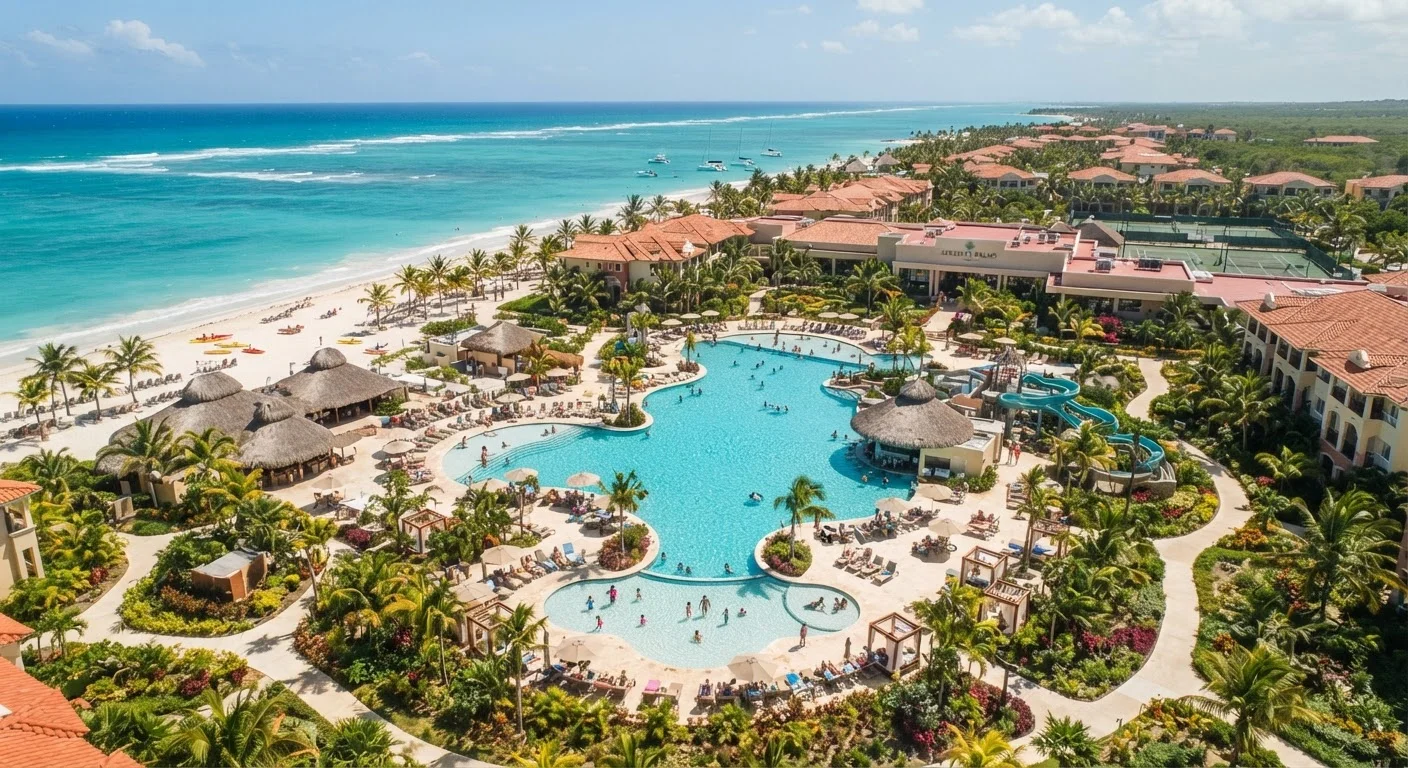
The term all-inclusive sounds comprehensive, but what's bundled varies significantly by property and destination. Most packages cover accommodations, three daily meals at buffet restaurants, select beverages (typically domestic alcohol, soft drinks, and basic cocktails), and access to standard pools and beach areas. Non-motorized water sports are often included at Caribbean resorts but not always elsewhere.
What's commonly not included: premium à la carte restaurants (which may require reservations and a surcharge), top-shelf spirits, spa treatments, motorized water sports, airport transfers, resort fees charged separately at checkout, and off-property excursions. Gratuities exist in a gray area - some resorts include them, others expect additional tipping from guests.
For a clearer picture of costs families routinely miss, see hidden costs on family trips.
The Pros: Where All-Inclusive Delivers for Families
When the math works, it really can work. Here's where all-inclusive resorts provide genuine value for family travelers.
Predictable daily spend reduces budget anxiety
With meals and drinks prepaid, families avoid the unpredictable dining costs that often derail travel budgets. This structure is especially helpful for longer trips where meal costs accumulate quickly.
Kids' programs and amenities in one place
Many all-inclusive resorts offer supervised kids' clubs, dedicated pools, and age-appropriate activities, which can provide genuine downtime for parents. The logistics of entertaining children are partly handled by the resort.
No per-meal decision fatigue
With food always available on-property, families sidestep the daily negotiation of where to eat and what it costs - a meaningful convenience when traveling with picky eaters or varied schedules.
Child stay-free policies can substantially cut costs
Resorts that allow children under a set age to stay and eat free can make all-inclusive pricing genuinely competitive, especially for families with two or more young children.
Simplified safety and logistics in unfamiliar destinations
For families new to international travel, staying within a managed resort environment reduces the stress of navigating food safety, transportation, and language barriers in an unfamiliar country.
The predictability factor is particularly meaningful for families traveling with younger children. Knowing your food and drink costs are largely settled before you leave reduces daily friction - no negotiating over restaurant choices, no tracking every meal on a spreadsheet. For families who historically overspend on dining, a bundled rate can act as a useful ceiling.
The Cons: Where the Value Erodes
The case for all-inclusive weakens considerably once you look at how a typical family actually spends a week abroad.
Headline rates exclude airfare and transfers
Most marketed all-inclusive prices are land-only rates. Adding round-trip airfare for a family of four and airport transfers can add thousands of dollars to the actual trip cost.
Premium dining and drinks cost extra
Specialty restaurants, top-shelf spirits, and premium wine are routinely excluded from base packages. Families who prefer varied dining often spend more than anticipated on upgrades.
Off-property excursions add significant cost
Resort-booked excursions - snorkeling trips, cultural tours, zip-lining - can run $80-$150 per person. A family of four taking two excursions could spend $600-$1,200 on activities alone.
Gratuities are often expected on top of package price
While some resorts advertise gratuities as included, many guests report ongoing expectations for additional tipping, particularly for housekeeping, bartenders, and restaurant staff.
Value diminishes for teens and non-drinkers
All-inclusive pricing is partly built around alcohol consumption. Families with teenagers or adults who don't drink are effectively subsidizing a component they won't use.
Limited authentic cultural exposure
Staying exclusively on-resort insulates families from the destination's local culture, food, and economy - a tradeoff worth considering, particularly in destinations like Mexico where local experiences are part of the appeal.
Mexico and the Caribbean: Worth a Closer Look
Destination context matters enormously. Mexico's Riviera Maya, the Dominican Republic, and Jamaica are among the regions with the highest concentration of all-inclusive properties, and per-person pricing there can look attractive on paper. But compare the bundled rate against a self-catering villa or boutique hotel with a meal allowance before committing. For families considering Mexico specifically, what family travel in Mexico actually looks like offers useful on-the-ground context.
Destination context matters enormously. Mexico's Riviera Maya, the Dominican Republic, and Jamaica are among the regions with the highest concentration of all-inclusive properties, and the per-person pricing there can look attractive on paper - but compare it against the cost of a self-catering villa or a smaller boutique hotel with a meal allowance before committing. See all-inclusive vs. self-catering for families for a structured comparison.
Running the Real Numbers
A useful exercise: take the per-person nightly rate, multiply by the number of nights and family members, then add estimated airfare, airport transfers (often $60-$120 round-trip per person in resort corridors), and any excursions you realistically plan to take. Then compare that total against booking a standard hotel or apartment plus a realistic daily food budget.
$150-$400
Typical per-person nightly all-inclusive rate
Rates vary widely by destination and season; Caribbean properties generally fall in this range for adult guests, with significant variation for children.
~30%
Share of resort guests who dine off-property
Industry surveys suggest a meaningful portion of all-inclusive guests still eat at least one meal outside the resort, partially offsetting the bundled value.
$600-$1,200
Estimated excursion costs for a family of four
Based on two typical resort-booked excursions at $80-$150 per person - a common but often underestimated line item in family travel budgets.
Families who do this exercise often find the all-inclusive rate is competitive when children stay free or at a steep discount - a policy that varies widely by resort and age cutoff. When two adults pay full rate and two children pay 50-70% of the adult rate, the bundled math can reverse quickly. Building an honest family travel budget walks through how to structure this comparison before you book.
One more variable worth examining: how much of what's included will your family actually use? If your kids are teenagers who want motorized water sports and off-site adventures, or you prefer local restaurants over buffet dining, a significant portion of the bundle goes unused - and you're paying for it regardless.
For a broader look at what travel formats actually suit different family styles, the Family Travel Tips hub covers planning approaches worth considering alongside the accommodation decision.
The content provided on our blog site traverses numerous categories, offering readers valuable and practical information. Readers can use the editorial team’s research and data to gain more insights into their topics of interest. However, they are requested not to treat the articles as conclusive. The website team cannot be held responsible for differences in data or inaccuracies found across other platforms. Please also note that the site might also miss out on various schemes and offers available that the readers may find more beneficial than the ones we cover.