

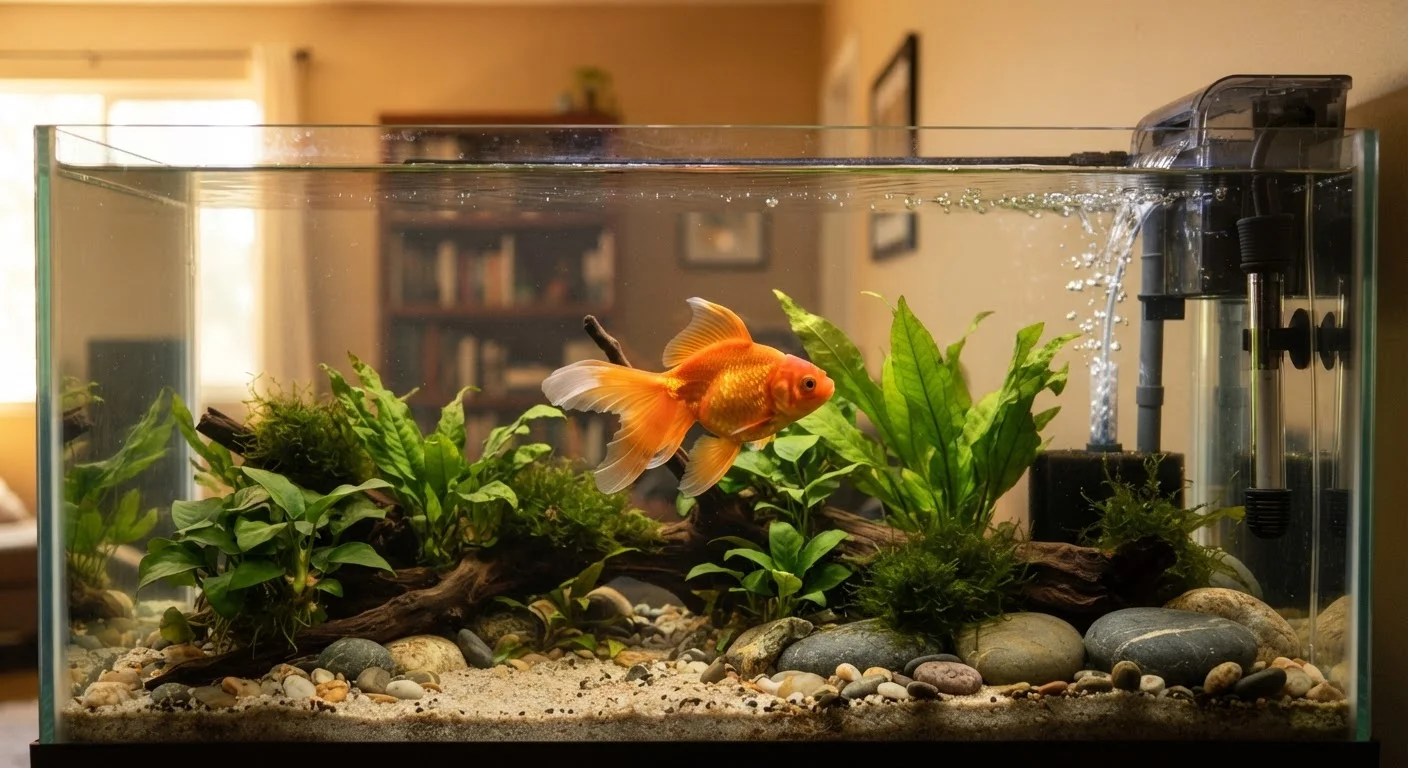
Where the 'Easy Fish' Reputation Comes From
Goldfish have been marketed as starter pets for decades - inexpensive to buy, sold in small bags at fairs and pet stores, and frequently pictured in tiny glass bowls. That image has stuck. For families hoping to introduce a child to pet ownership without a large commitment, goldfish seem like a logical first step.
The reality, supported by aquatic veterinary guidance, is quite different. Goldfish are hardy in the sense that they survive a wide temperature range, but survival and thriving are not the same thing. The gap between what goldfish need and what most beginners provide is wide enough that fish death within weeks is common - and that's not a lesson in pet care most families want their children to learn.
Understanding exactly what's myth and what's fact helps families make smarter decisions before purchasing - not after. For a broader look at how pet-care myths affect family budgets and animal wellbeing, see common myths about affordable pet care.
Myth
Goldfish are fine living in a small bowl - they only grow as big as their environment allows.
Fact
Goldfish growth being limited by tank size is a harmful myth. Stunted growth reflects poor water quality and stress, not healthy adaptation.
The idea that goldfish adapt their size to their container has been circulating for generations, but it misrepresents what's actually happening. In undersized containers, goldfish growth is stunted because toxins accumulate in the water faster than they can be diluted. The fish doesn't stop growing because it's comfortable - it stops growing because it's being poisoned slowly by its own waste. Aquatic veterinarians consistently recommend a minimum of 20 gallons for a single common goldfish, with 10 additional gallons per additional fish.
Myth
Goldfish only live a few years, so replacing them isn't a big deal.
Fact
Well-cared-for goldfish routinely live 10-15 years; some have been documented living over 20 years.
The short lifespan many families experience is a direct result of inadequate housing and water quality - not a natural trait of the species. A goldfish kept in proper conditions is a decade-long commitment, comparable in longevity to many dog breeds. Families should weigh this before purchasing, especially if the plan involves children who may leave for college within that window. Who becomes responsible for the fish then matters.
Myth
Goldfish don't need a filter - just change the water occasionally.
Fact
Goldfish produce significantly more ammonia than most aquarium fish and require a robust filtration system to survive in good health.
Goldfish are often described as 'dirty' fish for good reason - their digestion produces large amounts of ammonia, which is toxic even at low concentrations. Without a biological filter running continuously, ammonia builds quickly in any tank. Water changes alone cannot keep pace. A quality filter rated for at least the tank's volume (and ideally double it, given goldfish waste loads) is non-negotiable, not optional equipment.
Myth
Goldfish have a three-second memory and don't experience stress or suffering.
Fact
Research has demonstrated that goldfish can retain memories for months and exhibit measurable stress responses to poor environments.
The three-second memory claim has no scientific basis. Studies in animal cognition have shown goldfish can be conditioned to respond to stimuli over extended periods, suggesting memory spans of at least several months. More importantly for welfare purposes, goldfish display clear behavioral and physiological stress responses - including changes in color, clamped fins, and erratic swimming - when water quality deteriorates or tank conditions are poor. Dismissing their capacity for distress leads to neglect that families may not recognize as such.
Myth
Goldfish setup is inexpensive - just buy the fish and a starter kit.
Fact
A properly equipped goldfish tank with filtration, cycling supplies, and appropriate space can cost $150-$300 or more to set up correctly.
Basic 'goldfish starter kits' sold alongside fish in pet stores are typically too small and underfiltered for even one goldfish long-term. A responsible setup includes a tank of at least 20 gallons, a quality filter, a heater (for indoor environments with temperature swings), a water testing kit, dechlorinator, and cycling supplies. Ongoing costs include replacement filter media, electricity, and food formulated specifically for goldfish (not tropical fish flakes, which have a different nutritional profile). For more on managing pet costs without cutting corners on care, see pet wellness on a budget.
What Goldfish Care Actually Costs - and Demands
Beyond the myths, consider the practical reality. A single common goldfish can grow to 10-12 inches in a proper environment. Fancy varieties (like Orandas or Ryukins) stay smaller but are more fragile and more susceptible to disease. Either way, the equipment required is substantial.
10-15 yrs
Average goldfish lifespan in proper conditions
Aquatic veterinary sources consistently cite this range for goldfish kept in adequately sized, filtered tanks.
20+ gallons
Minimum recommended tank size for one goldfish
Fishkeeping organizations and aquatic veterinarians recommend at least 20 gallons for a single common goldfish, more for fancy varieties.
2-4 weeks
Time needed to cycle a tank before adding fish
The nitrogen cycle - establishing beneficial bacteria to process fish waste - must complete before fish are introduced to avoid ammonia toxicity.
A properly cycled aquarium - one where beneficial bacteria have been established to process waste - requires two to four weeks of preparation before a fish is ever introduced. That process, called the nitrogen cycle, is non-negotiable for fish health. Skipping it is one of the most common reasons new goldfish die quickly.
Weekly partial water changes (typically 20-30% of tank volume), regular filter maintenance, and water parameter testing are ongoing responsibilities. These aren't occasional tasks - they're the baseline. Families should honestly assess whether an adult in the household can reliably commit to this before bringing goldfish home.
If you're weighing the total first-year investment, the first-year pet checklist can help you map costs across all the essentials before you commit.
Avoid the 'Bowl and Replace' Cycle
Buying an undersized setup and replacing fish when they die teaches children that animals are disposable - the opposite of the lesson most families intend. Before purchasing, decide on the full proper setup or consider a different pet that better matches your household's realistic time and space constraints. A short-lived fish isn't a sign of bad luck; it's almost always a sign of inadequate conditions.
None of this means goldfish are the wrong pet for your family. It means they're the right pet only when chosen with accurate expectations. Families who go in prepared often find goldfish rewarding - genuinely interactive animals with distinct personalities and impressive lifespans. For a broader framework on choosing a pet that fits your household's reality, the guide on choosing your family's first pet is a solid starting point.
This article provides general pet care information for educational purposes. For guidance specific to your fish's health, consult a veterinarian with aquatic animal experience.
The content provided on our blog site traverses numerous categories, offering readers valuable and practical information. Readers can use the editorial team’s research and data to gain more insights into their topics of interest. However, they are requested not to treat the articles as conclusive. The website team cannot be held responsible for differences in data or inaccuracies found across other platforms. Please also note that the site might also miss out on various schemes and offers available that the readers may find more beneficial than the ones we cover.