

Summary
22 items · 20-40 minutes
Why the Homework Environment Matters More Than You Might Think
Where a child works affects how well they work. Research in educational psychology consistently points to the physical environment as a meaningful variable in children's ability to concentrate, persist through challenges, and complete tasks with less conflict. That doesn't mean every family needs a dedicated study room - it means intentionally evaluating what's already in place.
This checklist is designed to be run through once per child, and revisited at the start of each school year or whenever homework battles become a pattern. It covers five core areas: lighting, noise and distraction, seating and posture, supplies and organization, and device management. Each item is practical and low-cost to address.
For broader context on how the home environment connects to your child's study habits, see our guide on executive function and how it shapes how children study.
Lighting
Noise and Distraction Control
Seating and Posture
Supplies and Organization
Device and Screen Management
Tools That Help You Run This Checklist Effectively
You don't need to spend money to improve a homework space, but a few simple tools make the audit process and ongoing setup much smoother. Review the list below before walking through the checklist items.
Desk lamp
Provides targeted task lighting to reduce eye strain and eliminate shadows on the work surface.
Dedicated supply kit (pencils, eraser, ruler, scissors)
Keeps essential materials within reach so children stay focused rather than leaving the area to find supplies.
Visual or mechanical timer
Structures work and break blocks clearly without requiring the child to use a phone or tablet.
Whiteboard or sticky-note pad
Gives children a low-friction place to note reminders, vocabulary words, or steps mid-task.
Footrest or seat cushion
Corrects chair-to-desk height mismatches inexpensively so the child can sit comfortably for longer sessions.
White noise app or small speaker
Provides consistent ambient sound to buffer household noise when a fully quiet environment is not possible.
Once your child's space is set up, the next step is building the habits that allow them to use it well independently. Our article on organization habits that help children manage schoolwork without constant reminders is a natural follow-on - covering planners, task lists, and routines that reduce the need for parental reminders.
After the Audit: Turning Observations Into Action
Running through this checklist typically surfaces two or three quick wins alongside one or two bigger adjustments. Prioritize the must items first - lighting and seating in particular have an outsized effect and are often inexpensive to correct. Then work through should items over the following week or two rather than trying to overhaul everything at once.
Avoid Overhauling Everything at Once
Changing too many variables in the homework setup at the same time makes it hard to know which adjustments are actually helping. Make one or two changes, give them a week to settle in, and then evaluate. Rapid overhauls can also feel disruptive to children who rely on familiarity to feel settled.
Screens in the Homework Space Need Active Management
A device left within reach - even face-down - has been shown in studies to draw cognitive attention away from the task at hand. If a computer is required for assignments, close unrelated tabs and silence notifications before your child begins. A device policy that is inconsistently enforced tends to lose its effectiveness quickly.
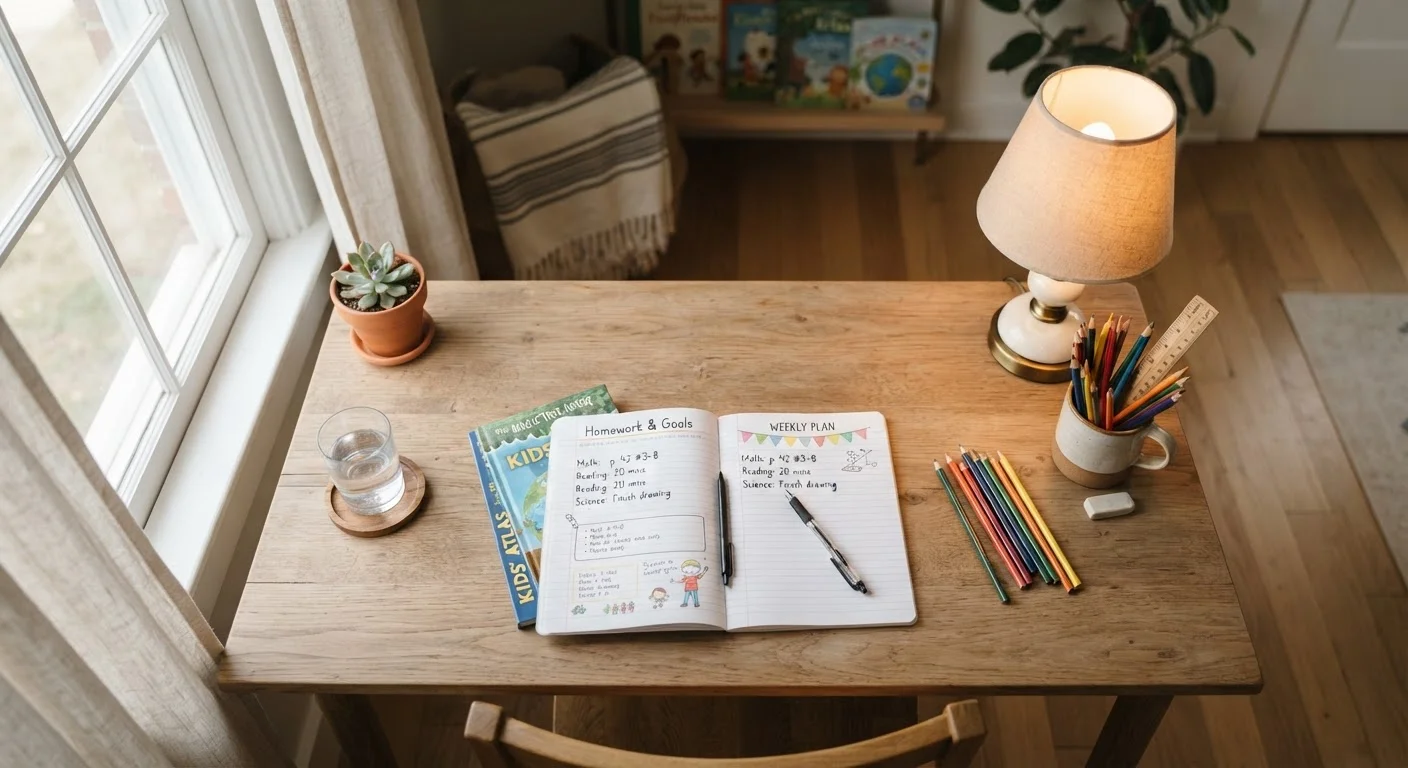
Involve your child in the process where possible. A child who chooses the placement of their supply kit or picks a small plant for the corner of their desk develops a sense of ownership over the space - and is more likely to settle into it willingly each afternoon.
Once the environment is solid, shift attention to what happens during homework itself. The subject-by-subject homework check gives you a structured way to review finished work across math, English, science, and humanities - without needing subject expertise. And if consistency across subjects is the challenge, building consistent study habits across different subjects at home offers targeted routines for each discipline.
The content provided on our blog site traverses numerous categories, offering readers valuable and practical information. Readers can use the editorial team’s research and data to gain more insights into their topics of interest. However, they are requested not to treat the articles as conclusive. The website team cannot be held responsible for differences in data or inaccuracies found across other platforms. Please also note that the site might also miss out on various schemes and offers available that the readers may find more beneficial than the ones we cover.