

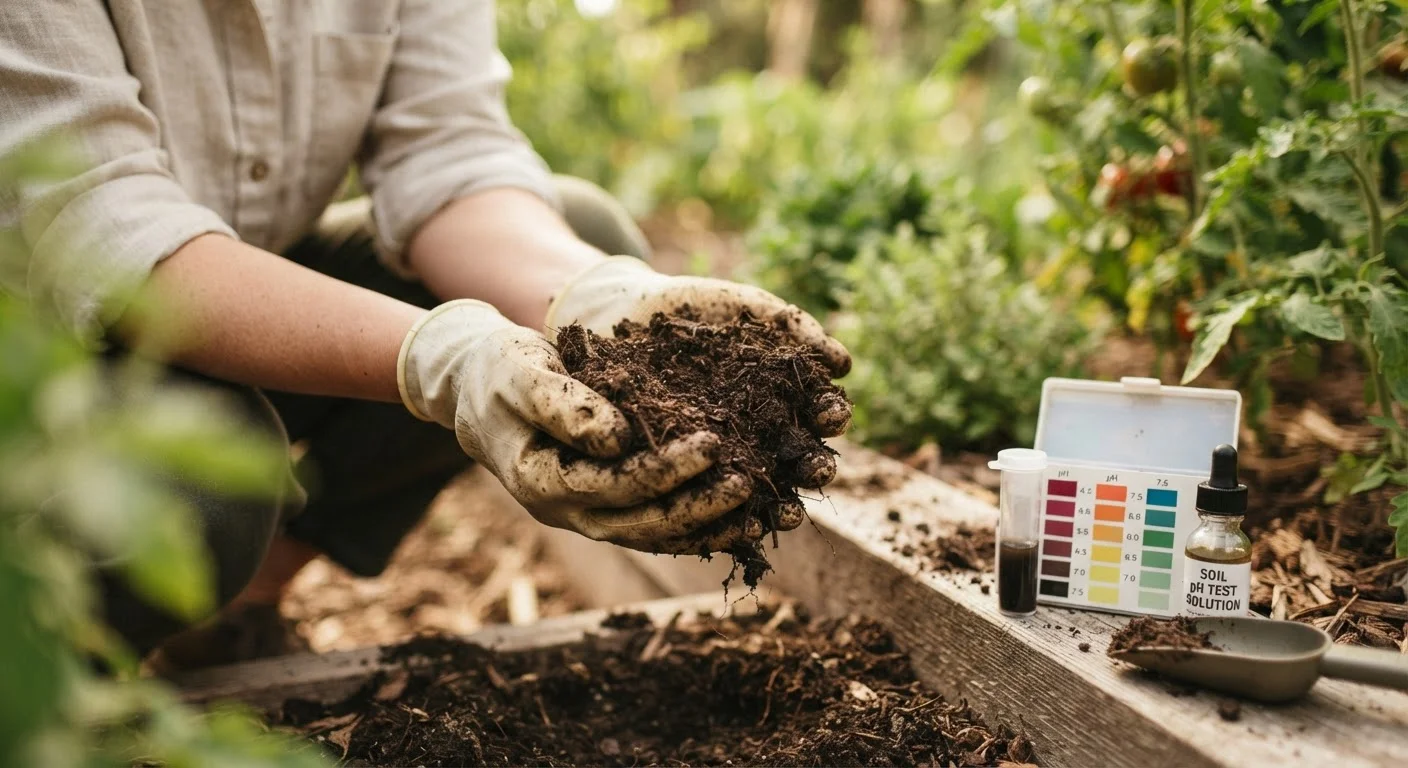
Why pH Is the Gatekeeper of Soil Nutrients
Imagine your soil is a locked pantry stocked with nutrients - nitrogen, phosphorus, potassium, iron, and more. Soil pH is the key that either opens or locks those nutrients away from your plants' roots. Even if you've added fertilizer or compost, plants may still show signs of deficiency if the pH is outside their preferred range.
This happens because soil pH changes the chemical form nutrients take. At very acidic or very alkaline levels, certain nutrients bind to soil particles in forms that roots simply cannot absorb. Nitrogen, phosphorus, and potassium - the three main plant nutrients - are most available in the 6.0-7.0 range. Micronutrients like iron and manganese become more available in acidic conditions, while calcium and magnesium are more accessible in neutral to slightly alkaline soils.
For a broader look at foundational gardening vocabulary, see our plain-language guide to common gardening terms.
6.0-7.0
Optimal pH range for most vegetables
This range is widely cited by university extension programs as the target for productive home vegetable gardens.
4.5-5.5
Preferred pH for acid-loving plants
Plants like blueberries, azaleas, and rhododendrons require significantly more acidic conditions than typical garden crops.
0-14
Full pH scale range
The pH scale is logarithmic, meaning each unit represents a tenfold difference in acidity or alkalinity.
How to Find Out Your Soil's pH
Testing your soil is an easy, affordable first step. Home test kits - typically a set of test tubes, solution, and a color chart - give you a ballpark reading within minutes. For more reliable results, many state university cooperative extension services offer mail-in soil tests. These labs often provide detailed reports that include pH, nutrient levels, and specific amendment recommendations for what you want to grow. The cost is generally modest and the information is well worth it.
When collecting a soil sample, gather small amounts from several spots in the garden bed and mix them together. This composite sample gives a more representative reading than a single scoop from one corner.
Test in Multiple Spots for Accuracy
Soil pH can vary significantly across a single garden bed, especially if different areas have received different amendments or organic matter over the years. Collecting and mixing samples from at least five to six spots gives you a composite reading that reflects the bed as a whole. Retesting every two to three years keeps you ahead of gradual pH shifts.
Adjusting pH: What Works and What Takes Time
If your soil pH is off, it can be corrected - but patience is essential. The two most common adjustments are:
- Raising pH (making soil less acidic): Ground agricultural limestone is the standard amendment. It works slowly, so applying it in fall before spring planting gives it time to incorporate. The amount needed depends on your current pH, target pH, and soil type - clay soils require more amendment than sandy soils.
- Lowering pH (making soil more acidic): Elemental sulfur is widely used and works gradually as soil bacteria convert it. Incorporating acidic organic materials - like composted oak leaves or pine bark - also nudges pH downward over time.
Always re-test your soil after a full growing season before applying additional amendments. Over-correcting pH is a common and avoidable mistake.
Working With Your Soil Instead of Against It
One of the most cost-effective gardening strategies is choosing plants suited to your soil's natural pH rather than spending effort trying to overhaul it. If your soil runs acidic, lean into growing blueberries, rhododendrons, or potatoes. If it's more alkaline, consider lavender, clematis, or asparagus.
Raised beds give you more control - you fill them with a purchased or blended growing medium and can set the starting pH more precisely. This is a popular option for families who want to grow vegetables without the guesswork of native soil conditions.
Understanding soil pH removes a lot of mystery from gardening frustrations. When plants look yellow, stunted, or fail to thrive despite good care, pH is one of the first variables worth investigating - and often one of the most straightforward to address.
Frequently Asked Questions
Most vegetable gardens do well with a pH between 6.0 and 7.0, which is slightly acidic to neutral. This range keeps the widest variety of nutrients accessible to plant roots. Some vegetables like potatoes prefer slightly more acidic conditions around 5.0-6.0.
Simple pH test kits are available at garden centers and let you test a soil sample with water and a color-matching strip. For more accurate results, many state cooperative extension services offer low-cost lab testing that also reports nutrient levels and amendment recommendations.
Ground limestone (lime) is commonly used to raise pH in acidic soils. Elemental sulfur or acidifying organic matter like pine needles can gradually lower pH in alkaline soils. Changes take weeks to months, so test again before adding more amendments.
No - different plants have different pH preferences. Blueberries and azaleas thrive in acidic soil around pH 4.5-5.5, while asparagus and brassicas prefer near-neutral conditions. Always check the pH preference for the specific plants you're growing.
Soil pH adjustments are gradual processes. Even with the right amendment, significant changes typically take one growing season or more. Applying amendments in fall gives them time to work before spring planting.
The content provided on our blog site traverses numerous categories, offering readers valuable and practical information. Readers can use the editorial team’s research and data to gain more insights into their topics of interest. However, they are requested not to treat the articles as conclusive. The website team cannot be held responsible for differences in data or inaccuracies found across other platforms. Please also note that the site might also miss out on various schemes and offers available that the readers may find more beneficial than the ones we cover.