

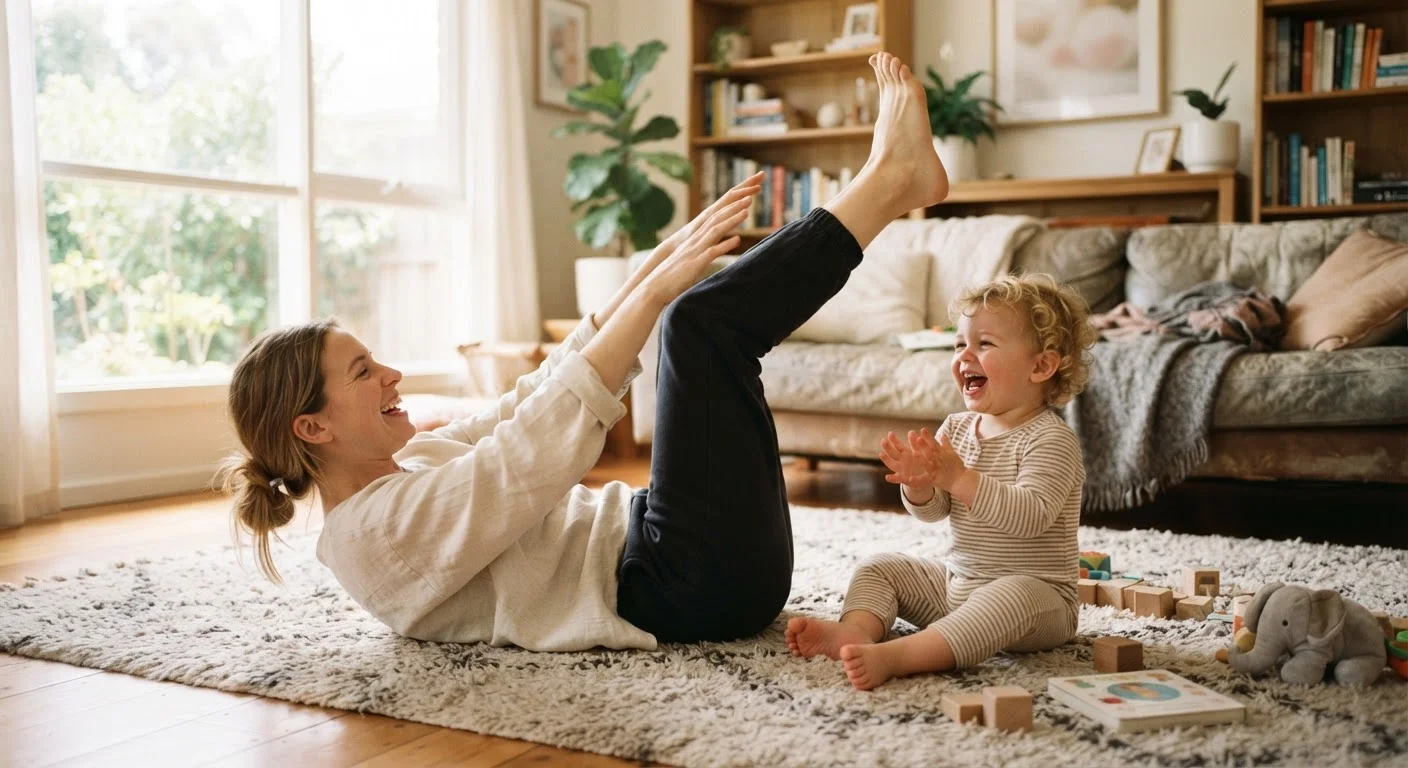
Why the Gym Model Doesn't Work for Most Parents
The standard exercise advice - 30 to 60 minutes of moderate activity most days - was largely developed without parents of young children in mind. For a household where nap schedules collapse, childcare is expensive or unavailable, and evenings are consumed by bedtime routines, carving out a dedicated workout slot can feel impossible. That's not a discipline problem. It's a structural reality.
What research increasingly supports is that movement doesn't need to be continuous to be beneficial. Public health guidelines from the U.S. Department of Health and Human Services acknowledge that activity can be accumulated in shorter bouts throughout the day. Ten minutes here, five minutes there - it genuinely adds up. This reframing alone can relieve a significant amount of guilt for time-stretched parents who feel they're failing a standard that was never realistic for their situation.
If you're building broader wellness habits from scratch, our guide to starting a self-care habit offers a grounded starting point that doesn't assume you have spare hours.
Best Practices for Fitting Movement Into a Parent's Real Day
The practices below aren't about optimizing a fitness plan - they're about finding footholds for movement in a life already packed with other priorities.
Treat movement as something you do with your kids, not instead of them
One of the biggest time costs of traditional exercise is that it requires separation from children, which often isn't feasible. Reframing movement as a shared activity removes that barrier entirely and doubles as quality time. It also models active habits for children at a developmentally receptive age.
Anchor brief movement sessions to existing daily routines
Trying to add exercise as a separate task to an already full day rarely works. Pairing movement with something that already happens - morning coffee, a child's TV time, waiting for the school bus - reduces the decision-making load and makes consistency more achievable.
Count all movement, not just structured exercise
Carrying groceries, climbing stairs, crouching to play at a child's level, pushing a stroller - these all have real physiological value. Mentally dismissing them as "not exercise" leads to underestimating your actual activity and feeling unnecessarily discouraged.
Set a floor, not a goal - commit to the smallest amount you'll always do
Ambitious targets collapse under pressure. A modest floor - say, a 10-minute walk on hard days - keeps momentum alive and prevents the all-or-nothing cycle that derails most well-intentioned plans. On easier days, that floor naturally gets exceeded.
Use rest honestly rather than replacing it with exercise
Sleep deprivation and chronic fatigue are common in parents of young children and directly affect mood, cognitive function, and overall health. Forcing exercise when the body needs rest can increase cortisol (the body's stress hormone) rather than relieve it. Recognizing when rest is the more restorative choice is itself a wellness skill.
This article is general health information and is not a substitute for personalized advice from a qualified healthcare provider. If you have any health conditions or concerns before changing your activity levels, please consult a professional.
Quick Wins You Can Start Today
You don't need a plan overhaul to begin moving more. The actions below require no equipment, no childcare arrangement, and no more than a few minutes to try.
For stress relief that pairs well with movement, the five-minute reset routines in our parent self-care section offer complementary micro-habits that fit the same small-window approach.
Letting Go of the All-or-Nothing Trap
Movement and Mental Health Are Closely Linked
Research consistently shows that even modest physical activity can support mood regulation and reduce symptoms of anxiety and depression - conditions that disproportionately affect parents of young children. The threshold for benefit is lower than most people assume: brief, regular movement may offer meaningful mental health support even when it doesn't look like a workout. This is general information; if you're experiencing persistent low mood or anxiety, please speak with a healthcare provider.
The biggest barrier most parents report isn't physical - it's the belief that if they can't do a "real" workout, doing anything at all isn't worth it. This thinking leads to long stretches of nothing, followed by bursts of over-ambitious effort that aren't sustainable.
Movement that fits your actual life will always beat a perfect routine you can't maintain. A 10-minute walk with a stroller, a few sets of bodyweight squats during cartoon time, dancing with your kids in the kitchen - these aren't consolation prizes. They are real, valid contributions to your health.
If reclaiming even small pockets of time for yourself feels fraught, our piece on building personal breathing room without guilt addresses the emotional side of carving out space for your own needs in a family-first schedule.
Sustainable movement for parents looks less like a training block and more like a quiet, ongoing negotiation with your day - one that you win a little at a time.
The content provided on our blog site traverses numerous categories, offering readers valuable and practical information. Readers can use the editorial team’s research and data to gain more insights into their topics of interest. However, they are requested not to treat the articles as conclusive. The website team cannot be held responsible for differences in data or inaccuracies found across other platforms. Please also note that the site might also miss out on various schemes and offers available that the readers may find more beneficial than the ones we cover.